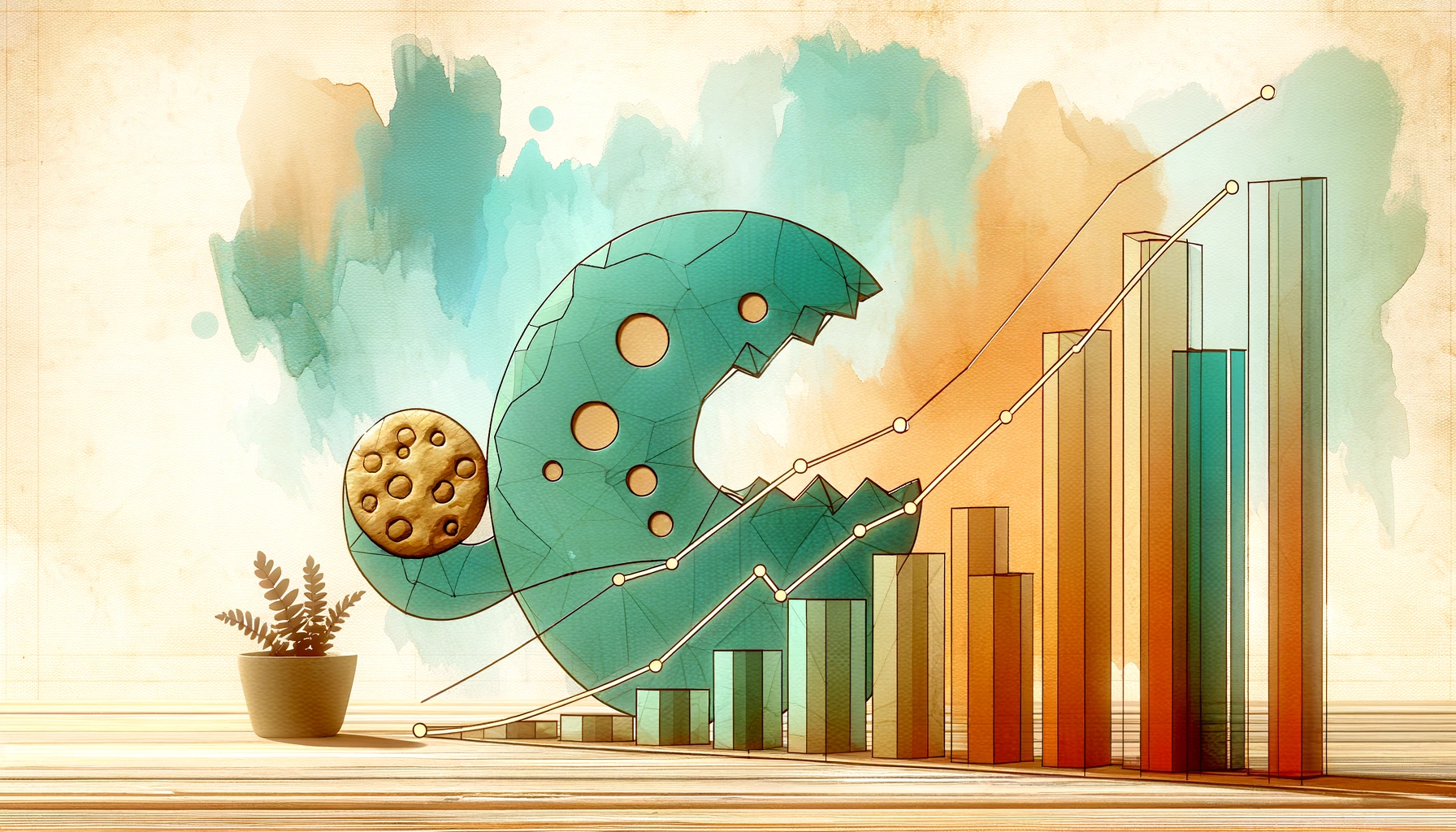

“It’s a certain type of rationality, and it’s certainly human. We’re all just trying to outsmart ourselves.”
Anybody who knows me is keenly aware of my sweet tooth, which can only be satisfied by a truly gluttonous consumption of sugar. My poison of choice is fresh pastries – whenever I find myself in the Mahane Yehuda market, I will clean off entire shelves of rugelach and danishes like a locust descending upon a field of unsuspecting crops. But when not in Jerusalem, I tend to settle for the American staple of cookies.
That being said, I am aware that shoveling fistfuls of butter and sugar into my face is likely not the most optimal path to a long and healthy life. And so, I try to be a responsible adult and work on my sweet tooth – convince myself that I prefer the taste of celery and kale chips – to somewhat mixed results. It sometimes works, but the problem remains that I still really like cookies.
Then, a few weeks ago, I discovered a cookie shop about a 10-minute walk from my house. And they have truly, incredibly tasty cookies. Like, really tasty. So, when the urge would overcome me, I would walk over and hand them my $3.99 in exchange for a delicious piece of goodness.
This went on for several weeks before my inner economist started knocking on my mental door.
“You know,” he said, “you could just buy cookies at the store. They might not be quite as good, but the cost per cookie would be lower. You could even buy pre-made cookie dough or unbaked cookies, and it would probably cost only a fraction. You’ll save money, and it will still be delicious.”
My inner economist is very convincing and knows that I have a weakness for rationality and cookies. It’s a dangerous combination.
And so, I considered his proposition and responded with the following:
“You may be right that the price per cookie would be lower,” I told him, “but the total cost could increase. If I purchase cookie dough at the cost of $1/cookie, I may end up consuming more than 4 cookies because the price is much more attractive – it’s entirely possible that my spending will actually increase.”
My inner economist responded with a retort on utility and willingness to pay that is overly technical for this blog post, but that I found convincing. Damn his rational arguments.
I was about to go buy some cookie dough.
But instead, I paused and added one final point.
“There’s an externality involved here,” I told him, “in the form of my health. I want cookies, but I don’t actually want cookies. They’re not healthy, and as much as I enjoy them, limiting my consumption to 1 or 2 a week is actually the best outcome, balancing my enjoyment and health. The higher price helps me consume my optimal level of cookies. It’s like a self-imposed, internalize-the-externality cookie tax.”
My inner economist stayed quiet.
It’s not that we like higher costs. But sometimes, we have our shortcomings, and we need to find a way to work within them. And so, we impose higher-than-necessary costs on actions that we know are not in our long-term interest. It’s a certain type of rationality, and it’s certainly human. We’re all just trying to outsmart ourselves.
We simply learn to acknowledge that some choices are harder to make in the moment, even if it’s the ‘right’ choice.
It’s the same reason that a recovering alcoholic doesn’t frequent bars – we do what we can to make that choice easier for ourselves.
It might mean putting your alarm on the other side of the room to force you to get up for that morning run. Or throwing out the cigarettes you’re trying to quit, rather than just sticking them in a drawer. Maybe even tossing your lighter, to throw another cost into the fray. It’s all about creating obstacles (or in economics, we’d simply call them costs) between you and bad decisions.
Once you start looking for this behavior, you’ll notice it’s actually quite common. And although I don’t know that I’ll ever manage to get over my sweet tooth, I trust the economist in me to help me manage the consumption of cookies.
Unless we’re in Mahane Yehuda – then all bets are off.


Leave a Reply