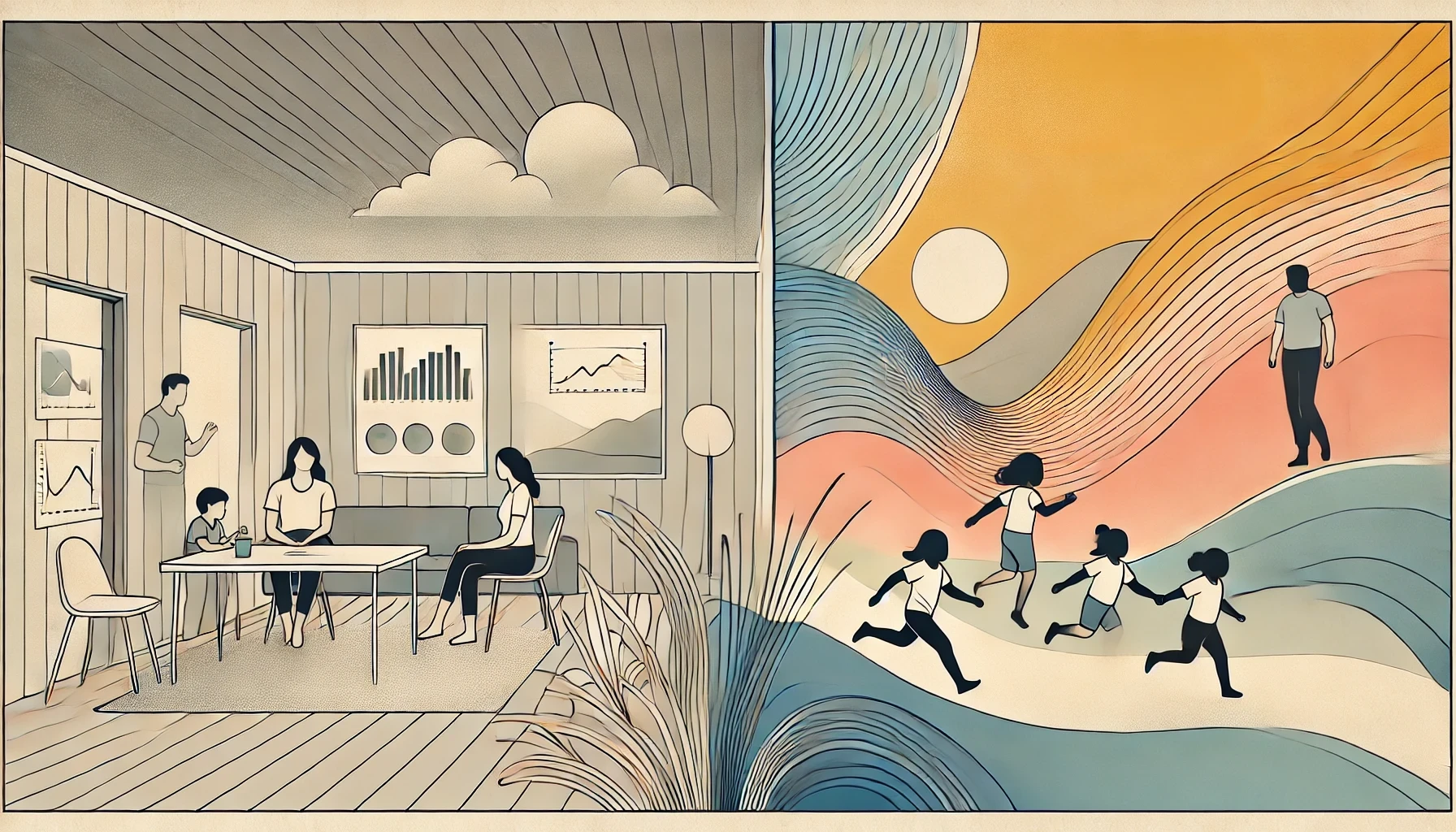

“If you asked a well-rested, well-reasoned parent what kind of behavior should be rewarded, they’ll likely say respect and cooperation. But in reality, incentives rarely align with our ideals”
My family recently took a trip to Maine, and it struck me how different these vacations are now that we’re all adults. Gone are the days of squabbling siblings and parents desperately trying to keep everyone entertained. Instead, these trips have become a rare opportunity for meaningful conversations that often get lost in the hustle of everyday life.
As we settled into our vacation rhythm, an interesting discussion emerged about our family’s ‘default mode’ during downtime. It became apparent that we were very much a ‘stay in’ kind of family. While we certainly enjoyed outings, they were the exception rather than the rule.
Curious about this tendency, I asked my parents why we rarely went out when I was younger. Their response was both amusing and insightful:
“We didn’t really have to,” they explained. “We had friends who took their kids out every weekend without fail, but that was mainly because their children were difficult to manage otherwise. Those kids would be climbing the walls, fighting with each other, and driving their parents to the brink of insanity. Getting them out of the house was the only way to survive the weekend.”
“You and your brothers, on the other hand,” they continued, “were so well-behaved and self-sufficient that we could actually relax on weekends. You’d entertain yourselves or play with the neighbors, giving us a much-needed break.”
This conversation revealed an interesting paradox: the ‘difficult’ kids were rewarded with exciting outings, while the ‘good’ kids stayed home. It’s not a criticism of my parents or our upbringing – I actually prefer a quiet weekend of board games to a day at an amusement park. But it does highlight how ‘good’ behavior can sometimes lead to seemingly counterintuitive outcomes.
If you asked a well-rested, well-reasoned parent what kind of behavior should be rewarded, they’d likely say respect and cooperation. But in reality, incentives rarely align with our ideals. This misalignment between behavior and outcomes isn’t limited to childhood experiences. Consider these examples:
- In the workplace, being overly accommodating can lead to colleagues taking advantage of you, potentially stalling your career progress instead of showcasing you as a valuable team player.
- In academic settings, students who are consistently high-performing may find themselves receiving less feedback and attention from the instructor, who facing time constraints, might choose to focus on those who are struggling.
- When job hunting, following up too frequently might actually push a potential employer away or make them value your candidacy less, rather than demonstrating your enthusiasm.
These scenarios illustrate how incentives, when combined with human psychology, can create unexpected results. While these discrepancies might seem trivial, they’re crucial to understand from an economic perspective. In economics, we focus on outcomes, so it’s vital to recognize which actions truly contribute to desired results.
Therefore, it’s not enough to ask, “Does this behavior make sense?”
Instead, we need to ask, “Does this behavior achieve the desired results?”
By framing the question this way, we’re better equipped to align our actions with our goals, navigating the sometimes counterintuitive relationship between behavior and outcomes.
Understanding this dynamic is the first step towards creating more effective incentive structures. Whether in parenting, professional settings, or any other area of life where behavior and outcomes intersect, it reminds us to look beyond the surface-level of ‘good.’


Leave a Reply