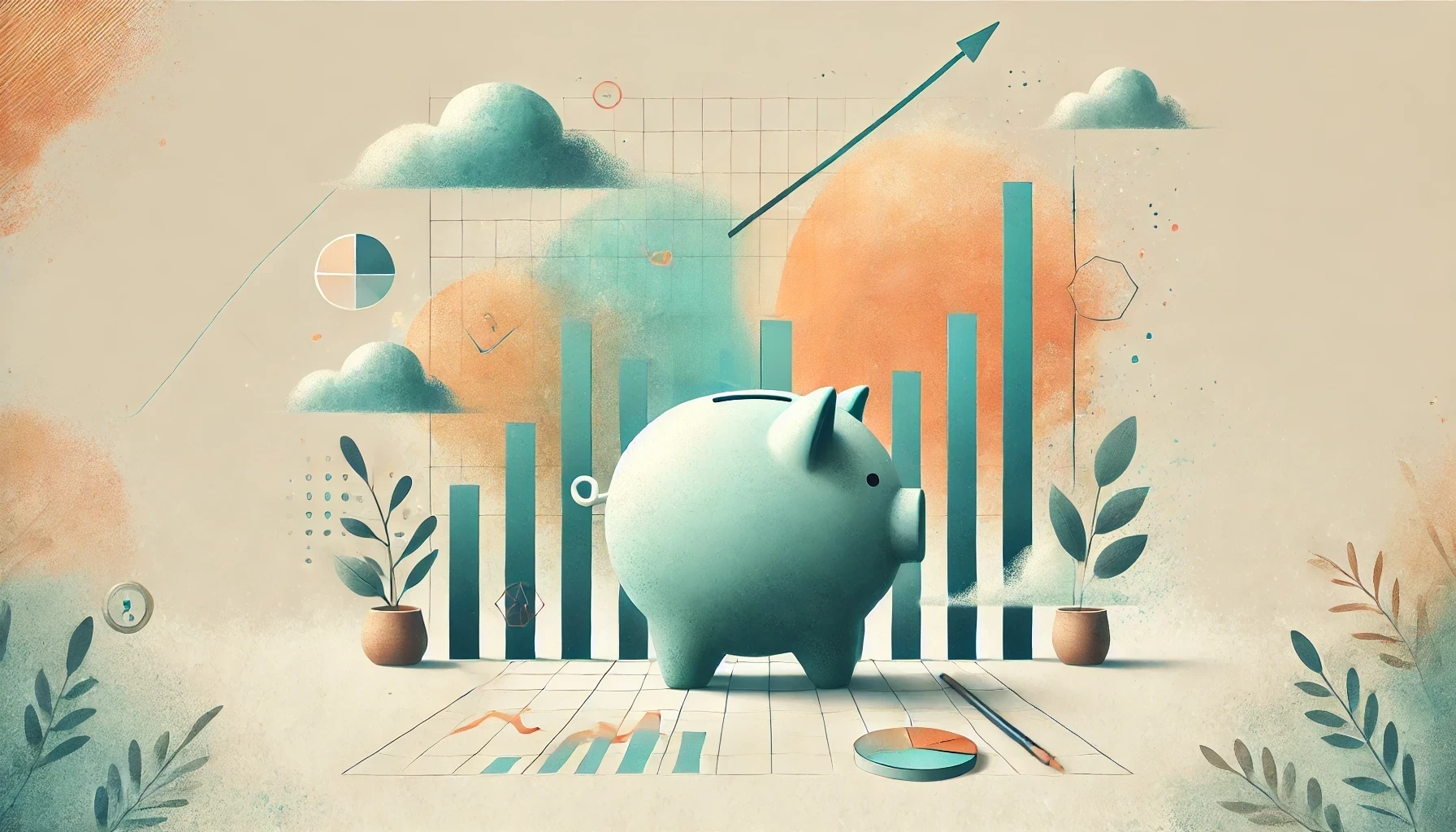

“If you want to spend a dollar when you’re 20 years old, you won’t be able to spend that same dollar when you’re 60”
Picture this: a world much financially simpler than the one we currently inhabit. In this world, you have an income which is deposited into a single savings account every month (let’s say it has a 4% return). There are no other financial tools or tricks – there are only ever 2 things that can happen:
- At any point in time, you can choose to pull a dollar(s) out of this account, and exchange it for anything that you want – food, drinks, vacations, cars, home, etc.
- Dollars that are not spent will remain in this savings account during which they grow and compound with interest, year after year.
Assume that by the end of your life, you plan to spend all the dollars at your disposal (remember, simple world, no need to think about generational wealth). Within this framework, it becomes increasingly obvious that any spending that occurs at a given point in time, detracts from spending at a different point in time. If you want to spend a dollar when you’re 20 years old, you won’t be able to spend that same dollar when you’re 60.
Moreover, you’ll notice that it’s not a 1:1 comparison… Because if you save the dollar when you’re 20 and leave it in your savings account, then by the time you’re 60, that same dollar is now worth $4.80. And so, any spending in the current moment not only reduces your future spending but does so by a multiplier.
These numbers can become meaningful when extrapolated. Suddenly, the difference between a $15K car and a $40K car when you’re 25 can pay for a small cottage in cash by the time you reach retirement age.
You might point out (and rightfully so), that not all spending is created equal. Spending might be investing in our network (think joining a Chamber of Commerce or attending industry conferences), our human capital (think going to college or taking a course to learn a new skill), or our relationships (think marriage, which leads to a joint income stream) – All of which will have some rate of return that impacts your decision.
While our real lives are far more complex than this simplified model, it still teaches us a powerful lesson about the tradeoffs we face every day. We have to live, and preferably also enjoy the process. But regardless, we should internalize the fact that spending is always going to be a tradeoff over time. Money will be spent at some time during our lifetime, and it can’t be in two places at once. Not to sound like a broken record, but in economics, there’s always an opportunity cost. By being mindful of these tradeoffs and making intentional choices that align with our values and goals, we can strike a balance between enjoying life today while not forgetting about tomorrow.


Leave a Reply