

“When we learn to manage our expectations in a way that moves outside of certainty, disappointments become more manageable and growth becomes a process rather than a binary.”
One thing people are unfailingly drawn to is certainty. I can hardly blame them, I’m the same way. Uncertainty may be a breeding ground for potential and growth, but that doesn’t make it any more of a comfortable space to be in.
Finding myself at the end of my education and in the midst of job applications and interviews, people constantly tell me how fortunate I am to have all of these exciting options before me – the world as my oyster, if you will.
But, my honest and most frequent response is that I’ll be much happier about all of this potential once it translates into something more concrete – potential doesn’t pay rent.
And I don’t think that I’m the odd-one-out for feeling this way. People seem to be constantly torn between two poles:
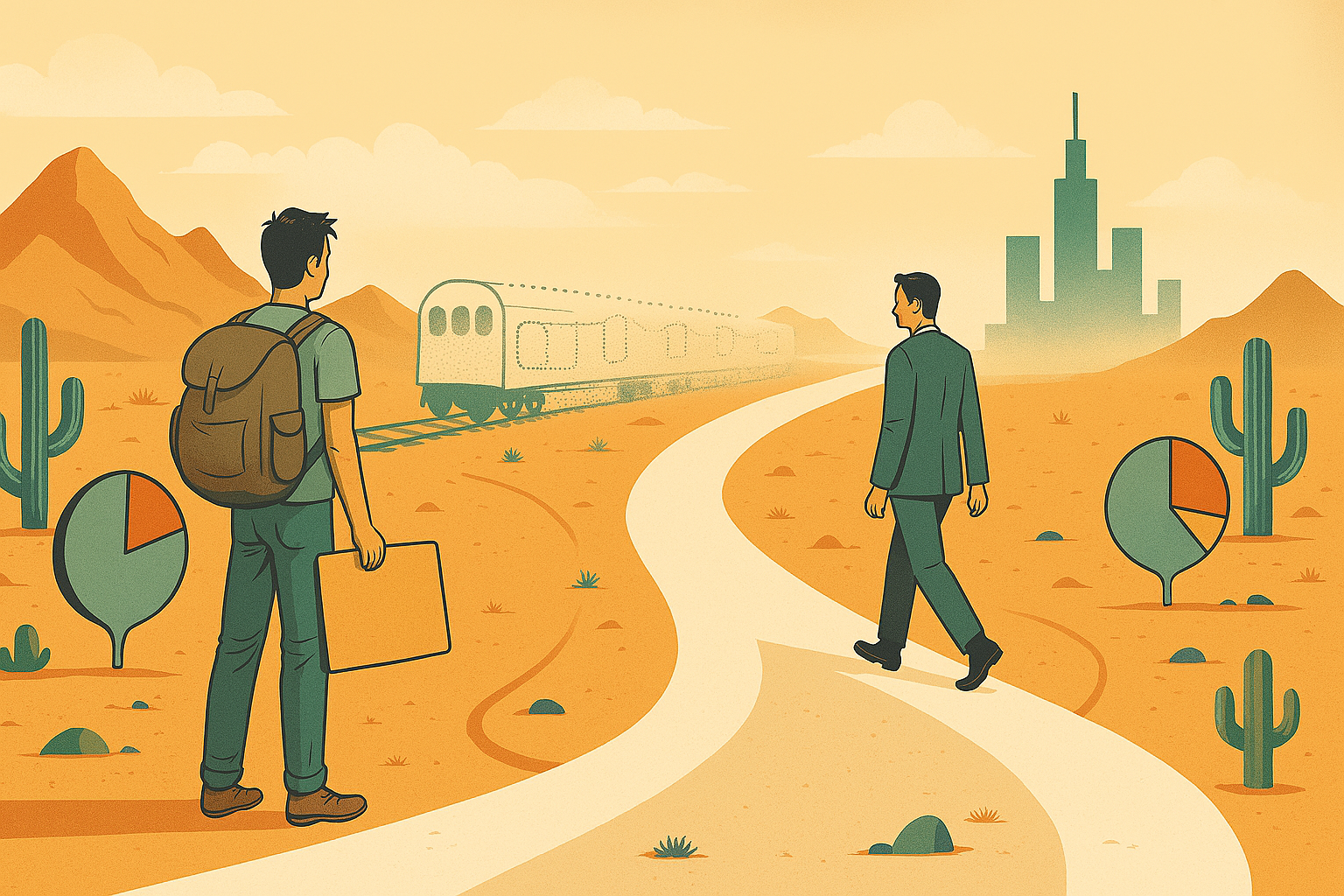
The potential that comes with uncertainty on one end, and the stability that comes with certainty on the other.
We have periods in our lives when we gravitate towards one or the other, or otherwise get sick of one and run towards the other. But in one way or another, much of our lives is spent between the magnetic and opposing draw of these two forces.
Oftentimes during young adulthood, there’s not yet many opportunities for certainty. You have to go out into the brave new world and build yourself, build your career, build your life. Actually, maybe it doesn’t end with young adulthood. But eventually we get there, everything falls into place, and the world is therefore solved. Right?
Probably not. And while there are many reasons for this (including the never-satisfied facet of human nature), one significant factor is the well-intentioned confidence provided by false certainty.
The fact is, we take a lot of things for granted simply because it would be too exhausting not to. Nobody wants to consider everything that could possibly go wrong at a given point in time – it would be crippling, and no matter how brilliant, prepared, or wealthy someone is, there is no one that can truly insulate themselves from the whims of the universe.
And so, we hold onto tickets of certainty – contracts that give us a sense that everything is going to be alright because somebody promised that it will.
- A job contract represents a promise that we’ll be able to make a living
- A clean bill of health at our most recent check-up means that there’s nothing to worry about
- A marriage means that our relationship is now set in legal and spiritual stone
But the fact of the matter is that none of this is real certainty – it’s only a facade that we have created to make ourselves feel a little better about the fact that it isn’t.
The company that just hired you may lay you off next week, the clean bill of health might have missed a tumor, and your marriage may only be one mistake away from shambles.
I know this may sound cynical, but I personally find it comforting. Because if certainty isn’t real in the most certain of circumstances, then perhaps we don’t have to spend as much time worrying about those areas where certainty falls short.
This approach helps us deal with the natural ups and downs of entrepreneurship and business, let alone life. That client you were sure you’d landed? Well, maybe not. That grant you had lined up? Who knows. That date you were sure went brilliantly? Whoops.
When we learn to manage our expectations in a way that moves outside of certainty, disappointments become more manageable and growth becomes a process rather than a binary. Certainty brings with it a sense of entitlement to a certain outcome, and that entitlement will never serve us. Entitlement is hardly pragmatic, and certainly never productive.
And so, as we find ourselves bouncing between the two poles of stability and potential, maybe we can take a step back and remember that those two poles aren’t as far apart as they might otherwise seem. After all, even our most stable moments are built on potential, and our greatest potential often emerges from what we once thought was certain. By embracing this interplay between certainty and uncertainty, we might just find a more balanced and resilient approach to life’s inevitable ups and downs.


Leave a Reply